Living Off the Grid
Total Energy Independence Starts Here
From hurricanes and wildfires to aging utility infrastructure, power outages are more frequent and unpredictable than ever. Fortress Power energy storage systems are designed to keep your home or business running smoothly during grid failures — without the noise, fuel, or maintenance of a traditional generator.
How It Works
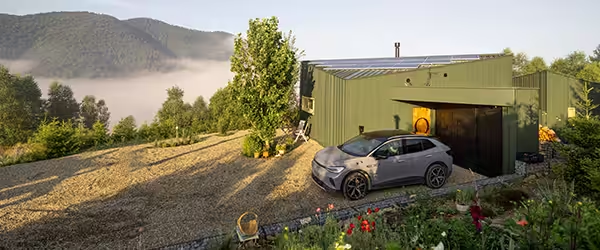
An off-grid system combines solar panels, battery storage, and often a backup generator to supply all of your home’s electricity without relying on the utility grid. Fortress Power’s lithium iron phosphate (LFP) batteries are the heart of that setup — safely storing solar energy during the day and delivering it at night or during cloudy weather.
Our modular systems scale to fit any home size or load profile, and our intuitive monitoring tools make it easy to manage your energy use 24/7.
Why More Homeowners Are Going Off-Grid
The rise in utility outages, increasing electricity rates, and desire for sustainable living have pushed thousands of homeowners to make the switch to off-grid life. And with solar + storage technology more affordable and reliable than ever, it’s no longer just for remote cabins — it’s for anyone who wants freedom, resilience, and control.
A properly designed off-grid system can power your entire home year-round — with no electric bill and no dependence on the grid.
Why Fortress Power for Off-Grid Living?
Scalable battery systems from 5 kWh to over 150 kWh
Outdoor-rated enclosures for all-weather performance
Safe, non-toxic LFP chemistry with built-in thermal protection
Seamless integration with solar panels, generators, and leading inverters
Real-time system monitoring and diagnostics via our Guardian Gateway
Long lifespan with industry-leading warranties on batteries and inverters
Built to Last: Battery Lifespan Comparison
When you’re living off the grid, your battery’s longevity matters. Fortress Power’s lithium iron phosphate (LFP) batteries are rated for up to 8,000 charge cycles, significantly outperforming Tesla Powerwall and traditional lead-acid batteries. That means more years of reliable, maintenance-free power — and fewer replacements over the life of your system.
*One cycle = one full charge and discharge. Lifespan estimates based on typical daily cycling usage.
Lower Cost Over Time: Price Per kWh Comparison
Upfront price is only part of the story. When you factor in total energy delivered over a battery’s lifetime, Fortress Power offers one of the lowest costs per kilowatt-hour in the industry. Thanks to its long cycle life and high efficiency, our systems deliver more value over time than Tesla Powerwall and lead-acid alternatives — making it a smarter long-term investment for off-grid living.
*Cost per kWh calculated by dividing upfront system cost by total usable energy over the battery’s lifetime.
Common Questions About Off-Grid Solar Battery Systems

It depends on your home's daily energy consumption, your local solar resource, and how many days of autonomy you want. The average US home uses around 30 kWh per day. A properly sized whole-home off-grid system typically requires between 20 and 60 kWh of battery storage, paired with an appropriately sized solar array. The Fortress Power System Recommendation Tool will size your system based on your actual loads and location — free to use, no account required.
During the day, your solar panels charge your Fortress Power batteries. At night, the batteries supply power to your home. During extended cloudy periods, a properly sized system includes enough days of autonomy to carry you through. For longer low-sun stretches — winter months at northern latitudes, for example — a backup generator can be integrated as a tertiary source that automatically kicks in when battery state of charge drops below a set threshold.
Yes, with the right system size. Fortress Power's modular LFP battery systems scale from small cabin setups to full whole-home off-grid installations. The key variables are your home's daily energy consumption, your location's solar resource, and the total battery and solar capacity installed. A Fortress Power certified installer can design a system sized for year-round independence based on your specific home and location.
Generally, fully off-grid systems — those with no utility connection — don't require a utility interconnection permit. However, local electrical and building permits may still be required depending on your jurisdiction. Requirements vary significantly by state, county, and municipality. Check with your local authority having jurisdiction (AHJ) before starting your build. Fortress Power's engineering team can help you understand what's typically required in your area.
Yes. Fortress Power systems are generator agnostic, meaning you can add any brand of generator to your system. A generator can serve as a backup for extended periods of low solar production. Fortress Power hybrid inverters can be configured to automatically start a generator when battery state of charge drops below a set threshold — so you're never without power even during prolonged cloudy weather. This is a common configuration for whole-home off-grid builds in northern climates or high-consumption households.
Fortress Power LFP batteries are rated for 8,000+ charge cycles at 80% depth of discharge. At one full cycle per day — typical for an off-grid system — that's over 20 years of daily use. This significantly outperforms lead-acid batteries (500–1,000 cycles) and most competing lithium batteries (around 3,000 cycles), making Fortress Power one of the best long-term value options for off-grid living.
A battery backup system stays connected to the utility grid and uses stored energy for outage protection and bill savings — the grid remains the primary power source. A true off-grid system has no utility connection at all: solar panels and batteries provide 100% of your electricity needs. A hybrid approach — grid-connected with islanding capability — is a middle ground where your system operates normally on the grid but can fully disconnect and run independently during outages.
Costs vary based on system size, location, and energy consumption. A small off-grid setup for a cabin or workshop can start around $10,000–$20,000. A whole-home off-grid system for a 2,000+ sq ft home can be much higher depending on the solar array and battery capacity required. Contact our team directly for a system recommendation.

Not Sure Where to Start? Design Your System First.
Before you buy a single component, use the Fortress Power System Recommendation Tool to map out your build. Enter your loads, application type, panel information and your backup goals — and the tool will size your battery and inverter configuration based on what you actually need. It takes the guesswork out of system sizing and helps you avoid the two most common off-grid mistakes: undersizing storage or overbuying hardware you don’t need. Free to use, no account required.
How Fortress Power Compares to Other Backup Solutions
Not all backup power is created equal. While traditional generators and older battery technologies offer some protection during outages, they come with limitations — from noise and maintenance to short lifespans and safety concerns. Fortress Power’s lithium iron phosphate (LFP) systems deliver clean, reliable, and long-lasting energy you can count on — with fewer compromises and more control.
Features | Fortress Power Solution | Other Lithium-ion Solutions
| Lead Acid | Generator |
|---|---|---|---|---|
| Applications | Backup Power, time of use, self-consumption, and off-grid | Backup Power, time of use, self-consumption, and off-grid | Backup Power | Backup Power |
| Depth of Discharge | 100% | 100% | 50% | N/A |
| Battery Chemistry | Safe Technology | Potential thermal runway or firing | Risk of harmful gasses | Environmental Pollution |
| Life Cycles | 8,000+ (15+ years) | 3,000 | 500-1,000 | N/A |
| Warranty | 10 years | 10 years | 6 months | 2 years |
| Fuel cost | $0 | $0 | $0 | $70-$130 per day |
| Maintenance | No | No | Every 6 months | Yes |
| Energy Cost ($/kWh) | 0.14 | 0.30 | 0.65 | 0.50 |
Ready for a Reliable Off-Grid System?
Get a free consultation and see how Fortress Power can help you ditch the grid.
"*" indicates required fields