Solar Self-Consumption (Zero Grid Export)
Use More of the Power You Produce
When the sun is shining, your solar panels often generate more electricity than your home can use. Without a battery, that extra energy goes back to the grid — and your utility decides what it’s worth. With a Fortress Power system, you can store that excess energy and use it later, when the sun goes down or rates go up.
How It Works
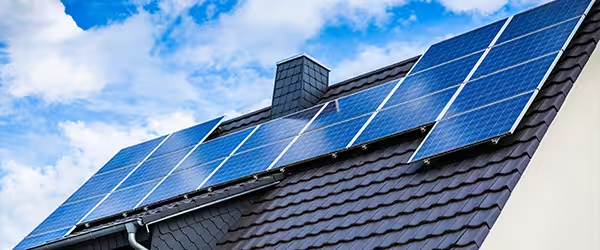
A Fortress Power battery system connects directly to your home’s solar array. During the day, excess solar energy charges the battery. At night or during cloudy weather, the system discharges that stored energy to keep your home running — reducing or even eliminating your reliance on the grid.
This approach is known as solar self-consumption, and it helps you get more value from your solar investment while increasing your energy independence.
Why It Matters
Most utility companies buy back solar energy at a reduced rate (or not at all). In areas where net metering is limited or being phased out, storing your own energy ensures you’re getting full value for every kilowatt-hour your system produces.
Instead of “selling low and buying high,” Fortress Power lets you keep what you generate and use it when it matters most.
Benefits of Solar Self-Consumption with Fortress Power
Maximize the return on your solar investment
Reduce or eliminate grid usage during peak times
Lower monthly utility bills
Avoid changes in net metering and utility policy
Stay powered even when the grid goes down
Use solar energy at night or in bad weather
Solar self-consumption is the first step toward full energy independence — and it pairs seamlessly with other Fortress Power use cases like backup power, time-of-use optimization, and Virtual Power Plant participation. It’s flexible, scalable, and designed to evolve with your home’s energy needs.
Common Questions About Solar Self-Consumption

Solar panels generate electricity whenever the sun is shining — often more than your home needs at that moment, especially midday. Without a battery, your inverter has nowhere to send that excess power except back to the utility grid. Your utility then decides what it's worth — sometimes a small bill credit, sometimes nothing at all. A battery gives that excess energy somewhere to go: into storage, ready for you to use later.
Net metering is a billing arrangement where your utility credits you for excess solar energy you export to the grid. The problem is that net metering rates have been cut significantly in many states — and some utilities have eliminated it altogether. When you're exporting solar energy at reduced credit rates and then buying it back at full retail price at night, a battery changes the math entirely. Instead of selling low and buying high, you store what you generate and use it on your own terms.
Zero grid export mode is a configuration that tells your system to use all solar energy your panels produce — storing any excess rather than sending it to the grid. Your Fortress Power system continuously monitors your solar output and home consumption, automatically directing excess solar into the battery. If the battery is full and you're producing more than you need, the system can also curtail panel output to prevent any export at all. This is particularly useful in areas where utilities don't compensate for exported solar or charge fees for grid-tied systems.
Most homes without battery storage self-consume between 20% and 40% of the solar energy they generate — the rest goes back to the grid. Adding a properly sized battery system can raise that to 80–90% or higher, depending on your home's energy usage patterns and the size of your solar array. The larger your battery relative to your daily usage, the more of your own solar you keep.
Fortress Power systems continuously monitor your solar production and home energy consumption in real time. When solar generation exceeds your home's immediate needs, excess power flows into the battery automatically. When the sun goes down or a cloud passes overhead and your panels can't keep up, the battery takes over — seamlessly and instantly, with no action required from you. During installation and setup, your installer can adjust your system's settings so you don't have to worry about it.
In most cases, no. Fortress Power systems can be added to existing solar installations. The specific configuration depends on your current inverter and system setup — AC-coupled and DC-coupled options exist for different setups. A Fortress Power certified installer can assess your current system and recommend the cleanest integration path without requiring you to start over.
The right battery size depends on how much excess solar your panels generate daily and how much energy your home uses after the sun goes down. A good starting point: size your battery to cover your evening and overnight energy use, which for most homes is between 10 and 30 kWh. Use the Fortress Power System Recommendation Tool to get a system size based on your actual usage and solar production.
Yes, significantly. Most solar-only systems leave a large portion of their generated energy on the table, exported to the grid at low credit rates. A battery system captures that value instead. On top of self-consumption gains, a Fortress Power system also adds backup protection, time-of-use rate management, and eligibility for EnergyBroker VPP programs, meaning your stored solar can actually earn you income when the grid needs it most.

Not Sure Where to Start? Design Your System First.
Before you buy a single component, use the Fortress Power System Recommendation Tool to map out your build. Enter your loads, application type, panel information and your backup goals — and the tool will size your battery and inverter configuration based on what you actually need. It takes the guesswork out of system sizing and helps you avoid the two most common mistakes: undersizing storage or overbuying hardware you don’t need. Free to use, no account required.
How Fortress Power Compares to Other Backup Solutions
Not all backup power is created equal. While traditional generators and older battery technologies offer some protection during outages, they come with limitations — from noise and maintenance to short lifespans and safety concerns. Fortress Power’s lithium iron phosphate (LFP) systems deliver clean, reliable, and long-lasting energy you can count on — with fewer compromises and more control.
Features | Fortress Power Solution | Other Lithium-ion Solutions
| Lead Acid | Generator |
|---|---|---|---|---|
| Applications | Backup Power, time of use, self-consumption, and off-grid | Backup Power, time of use, self-consumption, and off-grid | Backup Power | Backup Power |
| Depth of Discharge | 100% | 100% | 50% | N/A |
| Battery Chemistry | Safe Technology | Potential thermal runway or firing | Risk of harmful gasses | Environmental Pollution |
| Life Cycles | 8,000+ (15+ years) | 3,000 | 500-1,000 | N/A |
| Warranty | 10 years | 10 years | 6 months | 2 years |
| Fuel cost | $0 | $0 | $0 | $70-$130 per day |
| Maintenance | No | No | Every 6 months | Yes |
| Energy Cost ($/kWh) | 0.14 | 0.30 | 0.65 | 0.50 |
Ready for a Reliable System?
Get a free consultation and see how Fortress Power can help you keep more of the solar power you generate.
"*" indicates required fields