Home Battery Backup: Keep the Lights On When the Grid Goes Down
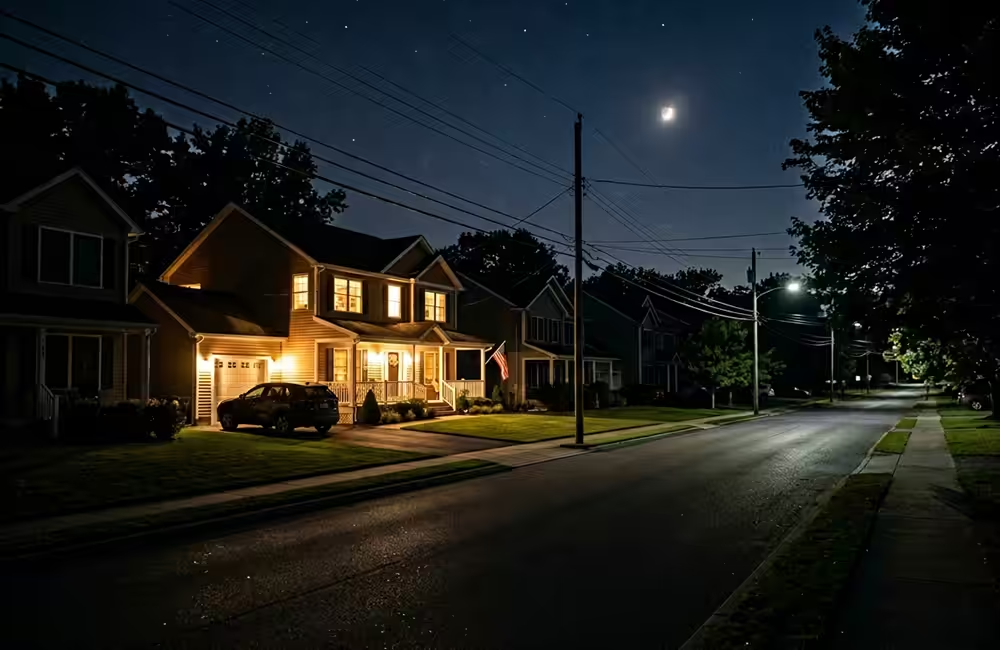
Keep critical appliances running during storms, blackouts, and utility failures. Fortress Power systems deliver reliable backup for lights, refrigerators, sump pumps, medical devices, and more. When the rest of the neighborhood goes out, you’ll still be on.
How It Works
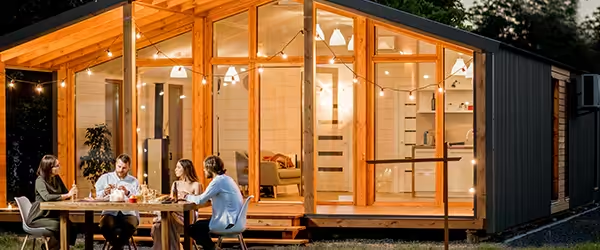
When the power goes out, your Fortress Power battery system automatically kicks in to supply backup power to essential appliances, lights, and devices. Whether you’re backing up a few critical loads or your entire home, our scalable systems — like the eForce whole-home battery system — ensure you stay safe, connected, and comfortable.
Backup What Matters Most
A Fortress Power system can keep the following running during an outage:
💡Lights and outlets
🛜Wi-Fi and routers
🍅Refrigerators and freezers
💧Sump and well pumps
💊Medical devices
🖨️Home office equipment
🔐Garage doors and security systems
Larger systems like the eBoost and eVault MAX can power HVAC, EV chargers, and even full homes — speak with a Certified Installer to customize your setup.
Why Fortress Power for Backup Energy?
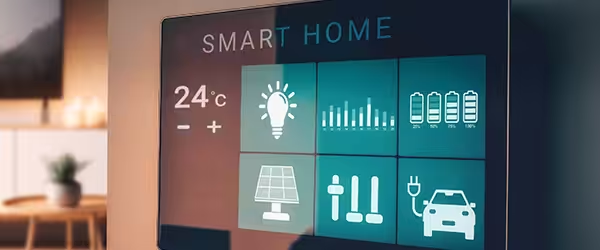
Automatic, seamless switchover during outages
Modular design — back up a few circuits or your whole home
Reliable LFP chemistry — safe, long-lasting performance
U.S.-based support and industry-leading warranties
You may wonder why your solar system shuts off when the grid goes down. During power outages, the utility grid also mandates solar systems to turn off. This prevents the ability of your solar system to feed power to the grid and to your home/business. A solar storage battery system can automatically isolate your solar system from the grid and will keep your family and business up and running.


Why Backup Power Matters More Than Ever
Power outages are becoming more frequent, longer-lasting, and more dangerous.
In September 2024, Hurricane Helene left over 1.6 million homes in Florida and 1.3 million in South Carolina without electricity — some for over a week.a
In January 2025, utility-initiated shutoffs during the California wildfires impacted more than 400,000 customers, disrupting lives and businesses across the state.b
And in February 2021, a historic winter storm in Texas caused 14.5 million people to lose power — contributing to over 700 deaths.c
These extreme events are no longer rare. Losing power for even a few hours can quickly become a serious risk. According to the FDA, refrigerated food can spoil in just 4 hours during an outage, and frozen food may not last more than 24–48 hours without a properly functioning freezer. Beyond food loss, lack of power can affect access to water, heating, medical equipment, and communications — all critical for safety and wellbeing.d

Not Sure Where to Start? Design Your System First.
Before you buy a single component, use the Fortress Power System Recommendation Tool to map out your build. Enter your loads, application type, panel information and your backup goals — and the tool will size your battery and inverter configuration based on what you actually need. It takes the guesswork out of system sizing and helps you avoid the two most common DIY mistakes: undersizing storage or overbuying hardware you don’t need. Free to use, no account required.
Common Questions About Home Battery Backup
It depends on your system size and which appliances you're running. A single Fortress Power eForce module (9.6 kWh) can power critical loads — lights, refrigerator, Wi-Fi, and medical devices — for 12 to 24+ hours. The eBoost scales up to 384 kWh, providing multiple days of whole-home backup. A certified installer can help size your system based on your actual energy usage and outage goals.
This is required by utility regulations. When the grid goes down, solar systems are mandated to shut off automatically to prevent backfeeding electricity onto downed lines, which could endanger utility workers. A battery storage system solves this by creating an energy island — isolating your solar system from the grid so it can continue generating and storing power for your home even during an outage.
Yes, with the right system size. Fortress Power battery systems are fully scalable — from backing up critical loads like lights and appliances to powering your entire home including HVAC, EV chargers, and high-draw appliances. The eForce stacks up to 268.8 kWh and the eBoost scales to 384 kWh per system, making whole-home backup achievable for most residential properties. A certified installer will assess your home's load profile and recommend the right configuration.
Fortress Power battery systems switch over automatically in milliseconds — fast enough that most appliances and electronics don't even register the interruption. Unlike a generator, which requires manual startup and can take minutes to come online, a battery system is always on standby and responds instantly the moment grid power is lost.
Yes, Fortress Power systems require solar panels in order to generate power. Pairing a battery system with solar panels maximizes your energy independence — your panels can recharge your battery during an outage, extending backup duration significantly.
Battery systems and generators both provide backup power, but they work very differently. Fortress Power LFP battery systems require no fuel, no maintenance, and produce zero noise or emissions. Generators cost $70–$130 per day in fuel, require regular servicing, and can only run as long as you have fuel on hand. Battery systems also switch on automatically in milliseconds, while generators require manual startup. On a cost-per-kWh basis, Fortress Power systems deliver energy at roughly $0.14/kWh compared to $0.50/kWh for a generator.
Yes. Lithium Iron Phosphate (LFP) is the safest lithium battery chemistry available for home energy storage. Unlike NMC (nickel manganese cobalt) batteries used in some competitor products, LFP cells are thermally and chemically stable — they do not experience thermal runaway, which eliminates the risk of fire or explosion under normal operating conditions. Fortress Power uses LFP exclusively across its entire residential and commercial product line.
The cost of a Fortress Power home battery system varies based on system size, inverter configuration, and installation complexity. Most residential installations range from $15,000 to $40,000. Fortress Power systems are sold and installed through a nationwide network of certified installers who can provide a detailed quote based on your home's specific needs.
Fortress Power LFP batteries are compatible with a wide range of inverter platforms commonly used in DIY solar builds — including Sol-Ark, Schneider Electric, and others — making them a popular choice among experienced DIY solar builders. That said, battery storage installations involve high-voltage DC wiring, local permit requirements, and utility interconnection rules that vary by state. We recommend consulting a Fortress Power certified installer to ensure your system meets local code, is installed safely, and is fully covered under warranty.
How Fortress Power Compares to Other Backup Solutions
Not all backup power is created equal. While traditional generators and older battery technologies offer some protection during outages, they come with limitations — from noise and maintenance to short lifespans and safety concerns. Fortress Power’s LFP battery systems deliver clean, reliable, and long-lasting energy you can count on — with fewer compromises and more control.
Features | Fortress Power Solution | Other Lithium-ion Solutions
| Lead Acid | Generator |
|---|---|---|---|---|
| Applications | Backup Power, time of use, self-consumption, and off-grid | Backup Power, time of use, self-consumption, and off-grid | Backup Power | Backup Power |
| Depth of Discharge | 100% | 100% | 50% | N/A |
| Battery Chemistry | Safe Technology | Potential thermal runway or firing | Risk of harmful gasses | Environmental Pollution |
| Life Cycles | 8,000+ (15+ years) | 3,000 | 500-1,000 | N/A |
| Warranty | 10 years | 10 years | 6 months | 2 years |
| Fuel cost | $0 | $0 | $0 | $70-$130 per day |
| Maintenance | No | No | Every 6 months | Yes |
| Energy Cost ($/kWh) | 0.14 | 0.30 | 0.65 | 0.50 |
Ready for Reliable Backup Power?
Get a free consultation and see how Fortress Power can protect your home or business from unexpected outages.
"*" indicates required fields