School Bus EV Charging + Battery Storage Case Study | Eureka City Schools, Eureka, CA
How Eureka City Schools deployed a Fortress Power eSpire commercial battery storage system at its bus charging depot to improve grid resilience, reduce peak demand charges, and keep zero-emission school buses on the road.
Location: Eureka, CA
Clients: Eureka City Schools — Bus Charging Depot
System: Fortress Power eSpire and Keystone EMS
System Size: 125 kW inverter, 233 kWh battery storage
Application: Resiliency, demand mitigation, SGIP utility incentives, VPP
The Need
For school districts making the transition from diesel to electric buses, the challenge does not end when the new vehicles arrive. The real complexity begins at the depot, where Level 3 charging infrastructure capable of powering a fleet of electric school buses places significant new demands on the electrical grid connection serving the facility.
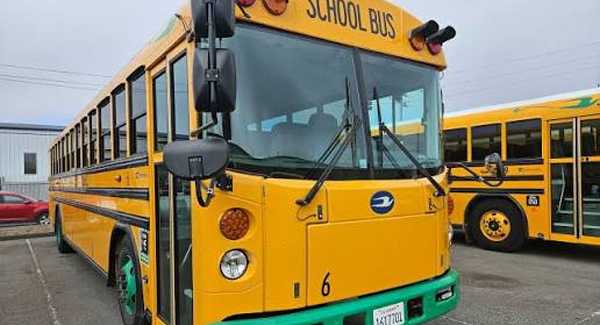
For Eureka City Schools, that transition was already underway. Supported by California Energy Commission grant funding, the district had committed to replacing aging diesel buses with zero-emission electric vehicles, reducing annual emissions and improving air quality for students and the broader Eureka community. The initial solar PV and Level 3 EV charging infrastructure had been commissioned and placed into servicem a meaningful step forward for the district’s clean transportation goals.
But solar alone was not enough. As multiple Level 3 chargers operated simultaneously, power demand spiked rapidly, driving sharp increases in peak demand charges on the district’s utility bill. And in PG&E territory along the Northern California coast, rolling blackouts introduced a reliability risk that went straight to the heart of the district’s mission: if the depot loses power overnight, buses do not charge, and students do not get to school. Rising energy demand, expensive utility charges, and ongoing grid instability were creating operational concerns that required a more advanced energy strategy.
The district needed a solution that could protect charging operations from grid interruptions, bring peak demand charges under control, and support the long-term economics of its investment in zero-emission transportation.
The Solution
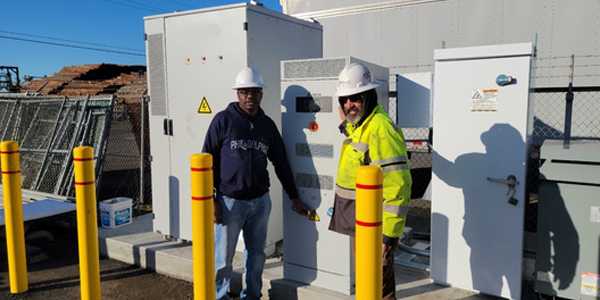
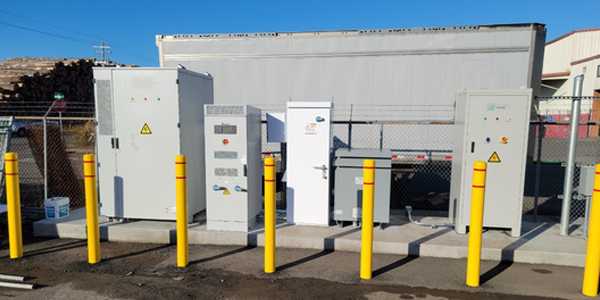
Fortress Power’s eSpire platform was deployed at the Eureka City Schools charging depot months after the initial solar and EV charging commissioning, adding the battery storage and intelligent energy management layer the system needed to perform reliably and cost-effectively.
Because the original solar PV and Level 3 charging infrastructure was already in place, the eSpire needed to integrate seamlessly into the existing site architecture without requiring major infrastructure changes. The all-in-one eSpire system provided exactly that flexibility, adding advanced energy storage and intelligent energy management capabilities while maximizing the value of the district’s existing solar investment, and significantly reducing the integration complexity that comes with piecing together multiple third-party components.
The Keystone EMS serves as the central management and monitoring platform, coordinating energy flows across the utility grid, solar generation, the battery, and the EV chargers in real time. During peak demand windows, the system draws from stored energy rather than the grid, directly reducing the demand charges that had been inflating the district’s utility costs. When solar is generating, that clean energy is stored for deployment when it is needed most. And when PG&E rolling blackouts affect the area, the eSpire provides the resiliency layer that keeps bus charging operations running through the night.
Keystone EMS also positions the system to participate in grid services and California’s Self-Generation Incentive Program (SGIP), and Virtual Power Plant (VPP) programs, unlocking additional financial benefits that further improve overall project economics.
Results
The Fortress Power eSpire delivered the reliability and cost outcomes Eureka City Schools needed across every dimension of the project.
Peak demand charges driven by simultaneous Level 3 bus charging are actively managed, reducing the utility cost burden that had accompanied the district’s EV transition. SGIP incentives provided additional financial offset on the installation, and grid services participation through Keystone EMS continues to improve long-term ROI. Improved backup capabilities mean that grid outages no longer put the morning fleet at risk.
The full system was delivered in under six months from purchase order, with an estimated payback period of under six years, a strong return for a public school district managing a long-term commitment to zero-emission transportation infrastructure.
Powering the Future of Student Transportation
The Eureka City Schools project illustrates a challenge that school districts across California and the country will increasingly face: the transition to electric buses is the right move, but the energy infrastructure to support it has to be designed thoughtfully to avoid trading one set of costs and risks for another.
Battery energy storage is what makes the economics and the reliability work. By pairing Level 3 EV charging infrastructure with the Fortress Power eSpire and Keystone EMS, Eureka City Schools turned a grid liability into a managed, resilient energy asset, one that supports its zero-emission fleet, controls operating costs, and keeps students moving. As EV charging infrastructure continues to expand, battery storage and intelligent energy management will play an increasingly important role in supporting reliable, scalable commercial charging environments.
Ready to explore what a commercial solar + storage system could do for your facility? Start a C&I Project Quote.