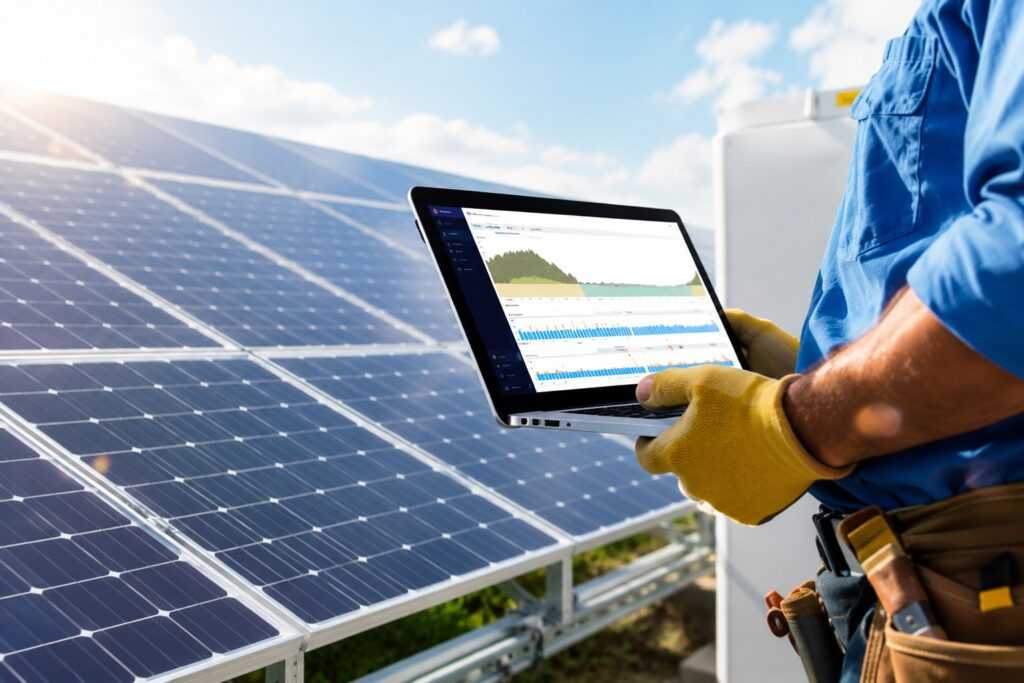
When evaluating a commercial battery energy storage system (BESS), it’s easy to focus on battery capacity, inverter size, or system specifications. While those components are essential, they’re only part of the equation. The real value of a commercial energy storage system comes from how intelligently it manages energy. That’s where an Energy Management System (EMS) makes the difference.
An advanced EMS transforms a battery system from simple backup power into an intelligent energy asset—helping businesses reduce operating costs, optimize solar production, participate in utility programs, and maximize return on investment (ROI).
What Is an Energy Management System?
Think of a commercial battery system as three essential components working together:
- The battery stores energy.
- The inverter moves power where it’s needed.
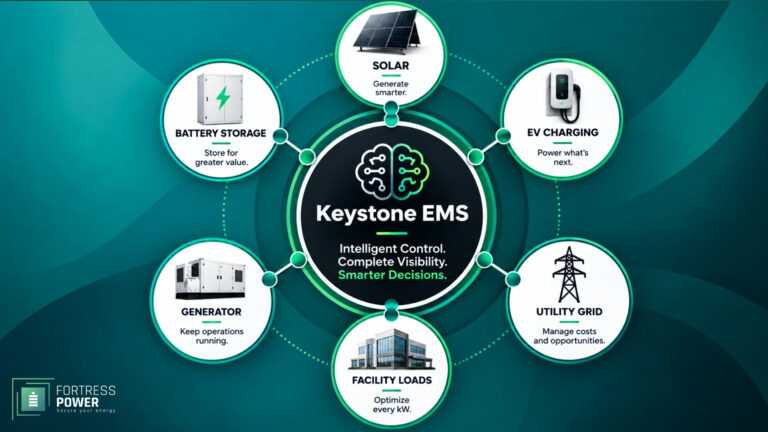
- The Energy Management System (EMS) determines when, where, and how that energy should be used.
Without an EMS, a battery can only perform basic charging and discharging. With an advanced EMS, the system continuously analyzes energy consumption, utility rates, solar production, and operating conditions to make intelligent decisions automatically. The result is a system that works harder and delivers greater value every day.
How an EMS Helps Lower Energy Costs
Every commercial facility has different energy demands. Some businesses face expensive demand charges. Others operate under complex time-of-use (TOU) utility rates. Many want to maximize onsite solar production or prepare for Virtual Power Plant (VPP) participation. An advanced EMS continuously optimizes the battery system to help meet those goals. Common optimization strategies include:
- Peak shaving to reduce costly demand charges
- Time-of-use optimization by charging and discharging when electricity costs are most favorable
- Solar self-consumption to maximize renewable energy usage
- Backup power management during utility outages
- Utility demand response and VPP participation where available
Instead of simply storing energy, the system actively works to improve financial performance throughout the day.
Why Intelligent Controls Matter
Consider a commercial facility with rooftop solar. During the day, solar production powers the building while excess energy charges the battery. As electricity rates increase later in the afternoon, the EMS automatically discharges stored energy to offset expensive utility power and reduce peak demand.
If the utility calls a demand response event, the system can discharge energy to support the grid. If an outage occurs, the battery seamlessly transitions to backup power for critical loads. All of these operating modes happen automatically without requiring constant operator intervention. That’s the difference intelligent controls can make.
One Connected Platform Simplifies Commercial Energy Storage
Many commercial energy storage projects rely on multiple software platforms from different manufacturers. One platform performs financial modeling, another controls the battery, while a third provides system monitoring.
When problems arise, troubleshooting across multiple vendors can become complicated.An integrated platform helps eliminate that complexity by connecting system design, financial analysis, energy management, monitoring, and hardware into one ecosystem. Because the software and hardware are designed to work together, installers gain a more streamlined commissioning process while owners benefit from improved long-term performance and visibility.
Matching the Right EMS to the Right Project
Not every commercial project requires the same level of energy management. Facilities with relatively simple operating schedules may only need basic functions such as:
- Standard peak shaving
- Basic time-of-use optimization
- Solar maximization
- Remote monitoring and alerts
Other facilities including schools, municipalities, manufacturing facilities, EV charging sites, and businesses operating under complex utility tariffs — often benefit from more advanced capabilities such as:
- Detailed energy optimization
- Circuit-level monitoring
- Complex utility rate modeling
- Virtual Power Plant (VPP) participation
- Demand response integration
- Advanced reporting and analytics
Choosing the right EMS allows installers to tailor the solution to each project’s operational goals while providing room for future expansion as energy programs evolve.
Looking Beyond Hardware Specifications
Battery capacity and inverter power are important, but they don’t tell the whole story. Two systems with similar hardware can deliver dramatically different financial results depending on how effectively they’re managed.
As utility rates become more dynamic and businesses look for new ways to reduce energy costs, intelligent energy management is becoming just as important as the batteries themselves. The most successful commercial energy storage projects combine reliable hardware with advanced software that continuously adapts to changing energy conditions, helping customers maximize savings today while preparing for tomorrow’s opportunities.
Learn More About Fortress Power Commercial Energy Storage
Fortress Power’s commercial energy storage solutions combine scalable battery storage, advanced inverters, and intelligent energy management software to help businesses reduce costs, improve resilience, and maximize the value of every kilowatt-hour. Whether you’re designing your first commercial battery project or deploying advanced energy management across multiple sites, choosing the right combination of hardware and software is the foundation for long-term success.