
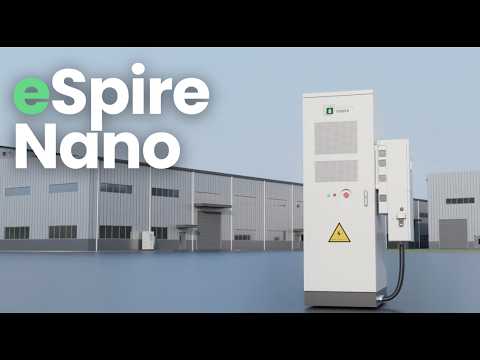
What Sets the eSpire Nano Apart From Other Three-Phase Energy Storage Solutions
As more installers move into commercial energy storage, the number of three-phase solutions on the market continues to grow. At first glance, many systems can look similar. They may offer comparable inverter sizes, battery capacities and backup capabilities.
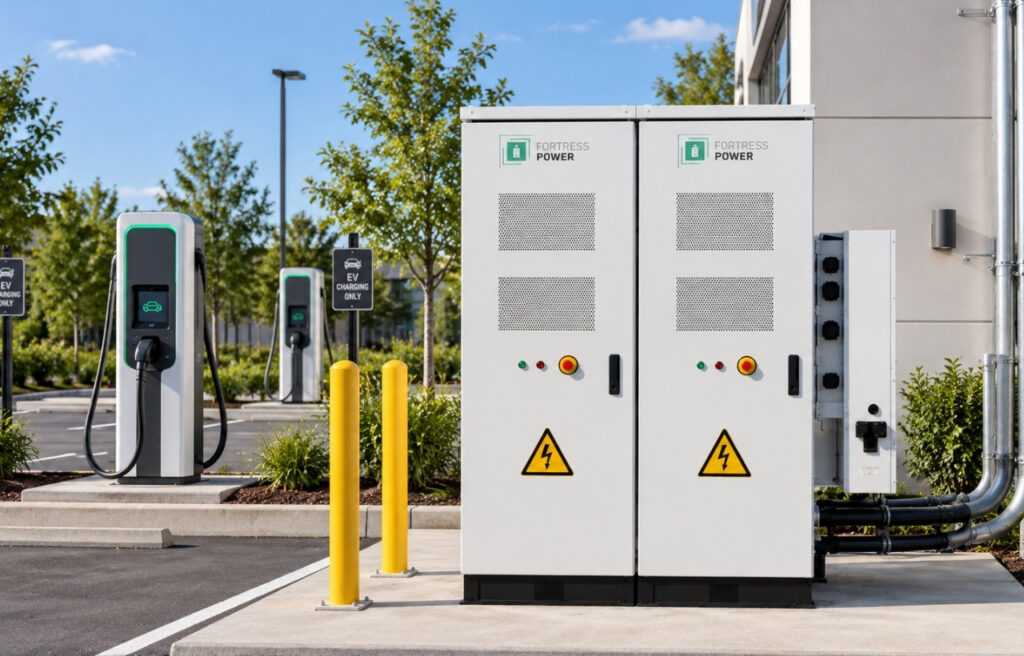
For installers, the differences often show up in everything surrounding the hardware. For example, how quickly the system can be deployed, how easily it can integrate with existing site assets, how much control it provides, and what support is available when the project becomes more complex. That is where the Fortress Power eSpire Nano is designed to stand apart.
More Flexibility Across Commercial Sites
The eSpire Nano supports 208V, 220V, 240V and 480V three-phase applications. This includes 30 kW and 60 kW inverter options, along with 40 kWh or 60 kWh battery configurations.
Installers have more flexibility when working across small- to mid-sized commercial sites without moving immediately into a much larger C&I platform. The system also supports both AC and DC coupling, making it suitable for new installations as well as sites with existing PV.
Faster, Simpler Commissioning
Commercial energy storage does not have to mean a long, complicated commissioning process. The Nano was designed around residential-speed commissioning, with system commissioning in under ten minutes. This is a core differentiator compared with other three-phase hybrid solutions. For installers, that can translate into less time spent getting the system online and a more repeatable process across projects.
Built for More Than Basic Battery Operation
The eSpire Nano can be deployed as a Standard system for more straightforward applications, but Fortress Power also offers Nano Pro powered by Keystone EMS when the site requires more advanced control.
Keystone EMS brings together monitoring, control and optimization across the battery system and other site assets, including PV, generators, EV charging and additional distributed energy resources. That gives installers a path to handle more sophisticated applications without changing to an entirely different platform.
More Advanced Control When the Site Requires It
With Nano Pro, Keystone EMS expands the system beyond manually scheduled battery operation.
Pro supports predictive peak shaving using 15-minute interval data. Additionally, more advanced time-of-use optimization, utility-program support, savings and performance reporting, and applications involving multiple meters or larger feeders. It also enables more advanced PV and generator integration.
For example, communications-based PV control allows AC-coupled PV to remain available during backup while keeping the Smart Port open for another asset. An external ATS can also increase available generator input while preserving additional site flexibility. That matters because commercial sites rarely stay simple forever.
Compare More Than Power and Capacity
When comparing three-phase hybrid energy storage solutions, power and capacity are only part of the decision. Installers should also consider commissioning, voltage flexibility, PV and generator integration. Not to mention, energy management capabilities, and the level of support available as projects become more complex.
Rather than requiring installers to choose between a simpler system and one capable of handling more advanced applications, Nano provides a platform that can grow with the needs of the site. Standard covers the core capabilities many commercial installations require, while Nano Pro and Keystone EMS extend that platform into more advanced energy management and asset control.
For installers expanding into C&I, that means one system with more room to take on different types of commercial applications — backed by Fortress Power from system design through installation and ongoing operation.
Have a C&I project in the pipeline? Talk to Fortress Power about whether eSpire Nano is the right fit.