January 2026

What Does It Really Mean to Live Off-Grid?

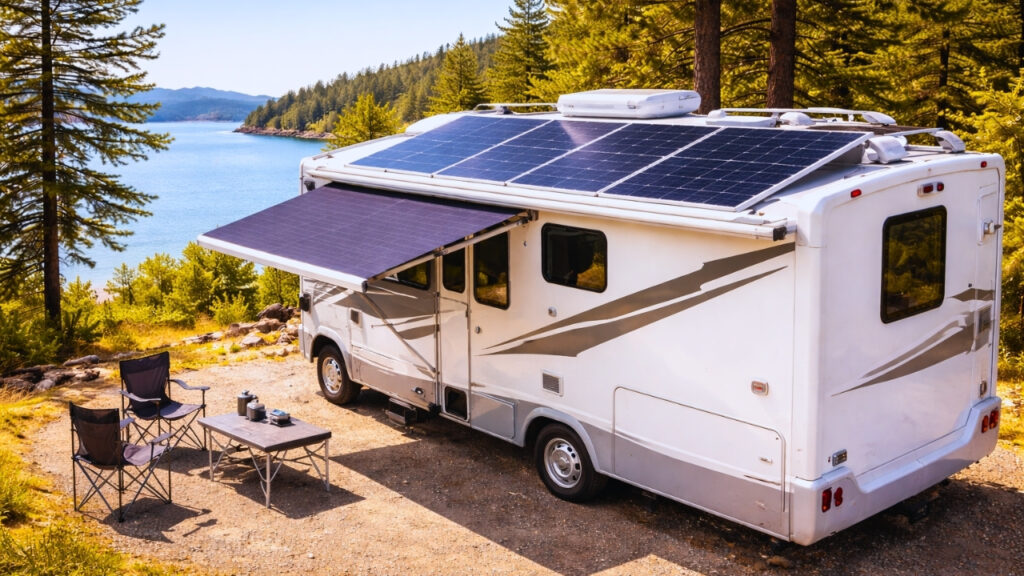
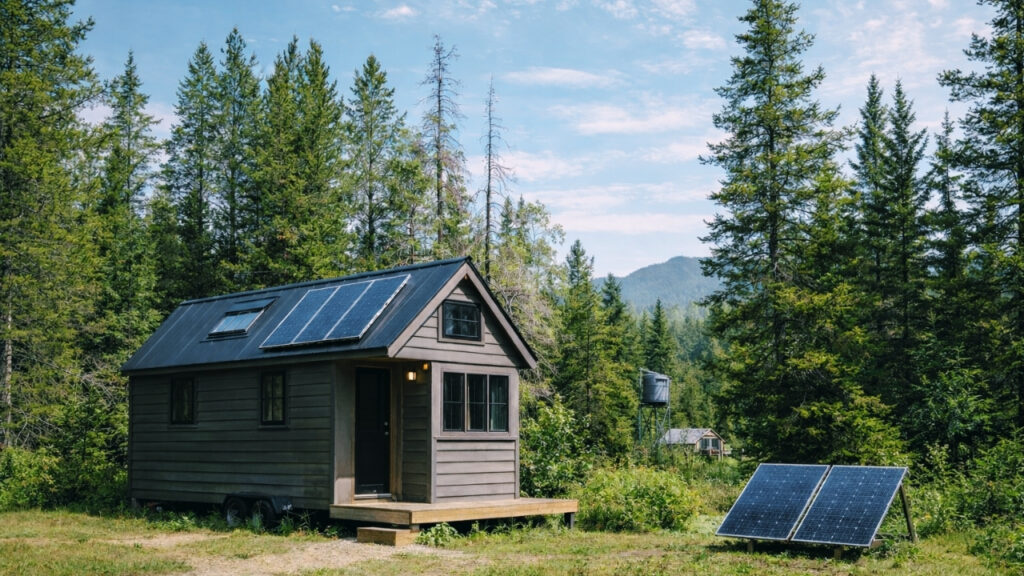
Living off-grid means your home or property operates without a connection to the traditional utility grid. Instead of relying on a power company, you generate, store, and manage your own electricity.

While off-grid living is often associated with remote cabins or extreme lifestyles, modern off-grid systems look very different. Today, advanced solar, battery storage, and inverter technology allow off-grid homes to operate reliably with the same comforts as grid-connected homes.

What Does “Off-Grid” Actually Mean?

An off-grid system is designed to supply all of a home’s power needs independently. This typically includes:

  • A renewable energy source, most often solar
  • Battery storage to store excess energy
  • An inverter to convert stored power into usable electricity

Unlike grid-tied systems, off-grid systems are built to operate continuously without utility support.

Off-Grid vs Grid-Tied vs Hybrid Systems

Grid-tied systems rely on the utility grid and usually lose power during outages, while hybrid systems combine grid access with battery backup for short-term outages. Off-grid systems operate independently at all times and are designed for full energy self-sufficiency. They also require more planning, but offer the highest level of energy control and reliability.

Why People Choose to Live Off-Grid

There are many reasons homeowners, businesses, and installers choose off-grid power systems. Common motivations include:

  • Energy independence from utilities and rising rates
  • Reliable power in remote or outage-prone locations
  • Predictable long-term energy costs
  • Increased resilience during storms or grid failures

Off-grid systems are commonly used for rural homes, cabins, farms, workshops, job sites, and backup-critical properties.

What You Need to Live Off-Grid Successfully

Successful off-grid living depends on proper system design. Key factors include:

  • Energy usage: Understanding daily power consumption is essential.
  • Battery storage: Storage allows energy generated during the day to be used at night or during low production.
  • System scalability: Modular systems allow capacity to grow as energy needs change.
  • Environmental conditions: Sun exposure, climate, and seasonal changes all impact performance.
Is Off-Grid Living Reliable?

One of the biggest misconceptions is that off-grid power is unreliable. In reality, many power outages occur on the utility grid. A properly sized off-grid system with sufficient battery storage can provide stable, continuous power without dependence on external infrastructure. This is where modern energy storage platforms, like those developed by Fortress Power, play a key role by offering scalable, high-capacity batteries designed for real-world off-grid applications.

Is Living Off-Grid Right for You?

Off-grid living is ideal for those who want full control over their energy and are willing to plan for their power needs. It may be a good fit if you:

  • Live far from utility access
  • Want reliable power regardless of grid conditions
  • Value energy independence and resilience

For others, a hybrid system may provide the right balance of backup and grid connection.

Living off-grid does not mean living without power. It means generating and managing your own energy with systems designed for reliability and independence. As energy storage technology continues to advance, off-grid living is becoming more practical, scalable, and accessible than ever before.

See how Fortress Power helps homeowners and installers design reliable, scalable energy systems built for independence. Learn more today.

Fortress Power Launches Two Next-Generation Inverters: The Envy Duo 21 and Solo 6.5K

High-Power, Versatile, and Smart Inverters Built for Today’s Residential and Light Commercial Energy Needs

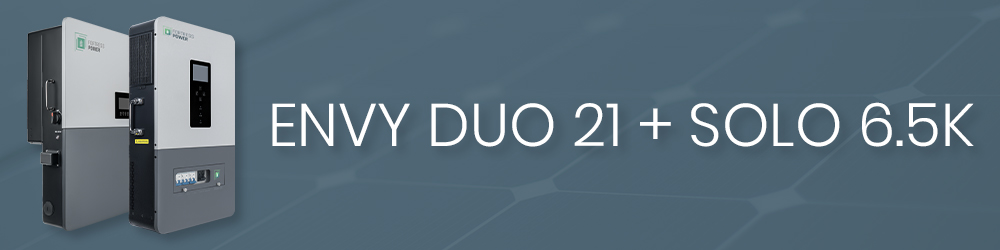
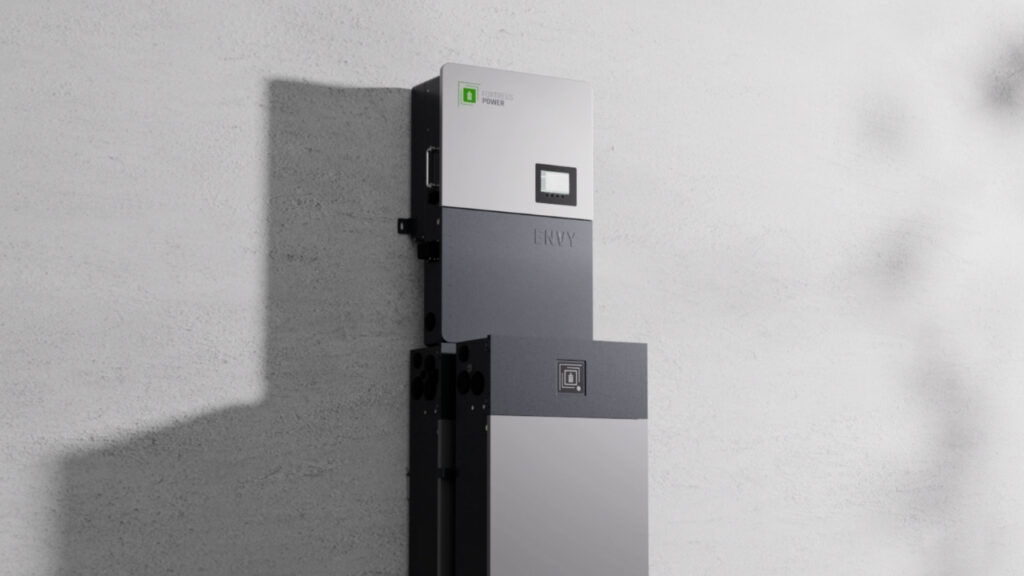
Langhorne, PA – January 15, 2026: Fortress Power, a leading manufacturer of advanced energy storage and inverter technologies, today announced the release of two new hybrid inverters designed to meet the expanding needs of both residential and light commercial applications: the high-capacity Envy Duo 21 and the compact, efficient Solo 6.5K.

Together, these new inverters offer dealers, installers, and system owners powerful, flexible options for clean energy systems — from single-home installs to multi-unit scalable deployments.

“The launch of the Envy Duo 21 and Solo 6.5K marks a major step forward in our mission to offer powerful, flexible, and easy-to-install solutions for every type of energy system,” said Matthew Daniel, Product Manager at Fortress Power. “Whether it’s a large-scale residential project or a compact off-grid installation, these inverters give installers the versatility and performance they need — all backed by Fortress Power’s commitment to reliability and innovation.”

The Envy Duo 21 is a 48V hybrid inverter engineered to provide exceptional power output and versatility. It supports up to 25kW of PV input, making it ideal for large residential systems and light commercial sites. Designed for flexibility, it operates in both 240V split-phase and 208V three-phase applications.

With the ability to parallel up to 10 units for a combined output of 120kW, the Envy Duo 21 provides a scalable, future-ready platform for growing energy demands. Built-in AC/DC breakers and an integrated rapid shutdown transmitter simplify installation and help ensure code compliance. Remote monitoring and firmware updates further enhance the user experience, giving installers and system owners full visibility and control.

The new Solo 6.5K is a 6.5kW non-export inverter designed for smaller homes, cabins, ADUs, and budget-conscious installations. Despite its compact footprint, it delivers impressive performance with up to 8kW of PV input.

Featuring integrated AC/DC disconnects, stackable parallel operation, and remote monitoring, the Solo 6.5K combines simplicity and efficiency. Its lightweight, installer-friendly design reduces installation time and makes it a strong choice for applications that require clean power, backup capability, and fast deployment.

For more information about the Envy Duo 21, Solo 6.5K and Fortress Power’s complete suite of products, visit www.fortresspower.com.

###

Headquartered in Langhorne, PA, Fortress Power is a global leader in designing and manufacturing advanced Lithium Iron Phosphate (LFP) battery energy storage systems for residential, commercial, and industrial applications. The company operates across North America, the Caribbean, Central America, and Asia. With award-winning local live technical support and partnerships with leading financial institutions, Fortress Power makes investing in solar and storage simple, accessible, and highly reliable.

Media Contact:
Anthony Pingicer
Marketing Director
Fortress Power
[email protected]
877-497-6937

Life After the 30% Tax Credit: How Homeowners Can Still Maximize Solar + Storage Value

For years, the federal 30% Investment Tax Credit (ITC) helped make solar and battery storage more accessible for homeowners. As the incentive landscape changes and eligibility becomes more complex, many people are asking the same question: “Is solar and energy storage still worth it without the full federal tax credit?

The answer is yes. But, the way homeowners see value has shifted. Instead of relying on a single federal incentive, today’s systems deliver returns through local programs, utility savings, and grid-connected revenue opportunities that continue year after year.

The Shift From Federal Credits to Local Incentives

While federal incentives may no longer be the primary driver, state and utility-level programs are playing a bigger role than ever. These programs are designed to address regional grid challenges, peak demand, and energy reliability. Not to mention, they reward homeowners who participate. Here are a few common types of incentives homeowners may see, depending on location:

1. Utility Battery Rebates

Many utilities offer upfront rebates for installing a qualifying battery system. These rebates can range from a few thousand dollars to significantly more, depending on system size and program availability.

2. Performance-Based Incentives

In some regions, incentives are tied to how your system performs over time, not just that it’s installed. Homeowners may receive payments based on:

  • Energy discharged during peak events
  • Availability during grid stress periods
  • Participation in demand response programs
3. State-Level Programs

Certain states offer well-established storage incentives. For example:

  • California has historically supported battery adoption through programs focused on grid reliability and wildfire resilience.
  • Northeastern states often provide incentives aimed at reducing peak demand during winter and summer extremes.
  • Mid-Atlantic and Midwest utilities are increasingly launching pilot programs to support distributed energy resources as grids modernize.

Because these programs vary widely, working with a system that’s utility-compatible and flexible is critical.

Monthly Utility Bill Savings Still Drive Real ROI

Even without a federal tax credit, energy storage provides immediate, ongoing savings through smarter energy use.

By storing solar energy or low-cost off-peak electricity and using it when rates are highest, homeowners can:

  • Avoid peak time-of-use charges
  • Reduce reliance on the grid during expensive hours
  • Lower overall monthly electricity bills

In high-rate markets, these savings alone can add up to thousands of dollars over the life of a system.

Virtual Power Plants: A New Revenue Stream for Homeowners

One of the biggest developments in the energy space is the growth of Virtual Power Plants (VPPs). These are programs that allow homeowner batteries to support the grid during peak demand.

Instead of being used only for backup power, batteries can now generate ongoing income. By storing solar energy or low-cost off-peak electricity and using it when rates are highest, homeowners can:

  • Avoid peak time-of-use charges
  • Reduce reliance on the grid during expensive hours
  • Lower overall monthly electricity bills

In high-rate markets, these savings alone can add up to thousands of dollars over the life of a system.

How Fortress Power EnergyBroker Program Fits In

Many utilities offer upfront rebates for installing a qualifying battery system. These rebates can range from a few thousand dollars to significantly more, depending on system size and program availability,


View this post on Instagram


A post shared by Fortress Power (@fortresspower)

The EnergyBroker program from Fortress Power helps homeowners turn their solar and storage systems into revenue-generating assets by connecting them with participating utilities. EnergyBroker works behind the scenes to optimize when stored energy is used, ensuring homeowners receive the most value from local incentive programs. Key benefits include:

  • Recurring Revenue
    Homeowners earn upfront and performance-based incentives by allowing their batteries to participate in grid services.
  • Seamless Integration
    EnergyBroker works directly with Fortress Power systems and Guardian monitoring — no additional hardware required.
  • Utility Partnerships
    Active across multiple states, including both pilot programs and long-term utility contracts.
  • Grid Support & Resilience
    Participation helps reduce peak demand, stabilize local infrastructure, and support a more resilient energy grid.

In many regions, VPP participation is becoming one of the most valuable incentives available and replacing what homeowners once expected from federal tax credits.

The New Solar + Storage Value Stack

Today’s strongest solar and battery systems deliver value from multiple angles:

  • Local and utility incentives
  • Monthly bill savings
  • Backup power and outage protection
  • VPP and grid services revenue
  • Long-term insulation from rising electricity costs

Instead of relying on a single incentive, homeowners benefit from stacked, long-term returns that continue well beyond installation. As incentives shift toward performance and grid participation, systems that can adapt and actively work for homeowners, are becoming more valuable.

The question is no longer “Is there a tax credit?”, but “How many ways can my energy system deliver value over time?”

Learn more about how Fortress Power solutions can help you maximize returns beyond the federal tax credit. Get started today.

Fortress Power eForce vs. eBoost: Choosing the Right Residential Battery System

Selecting a home battery system is a major decision. You need reliable performance, long-term durability, and a solution that aligns with your energy goals.

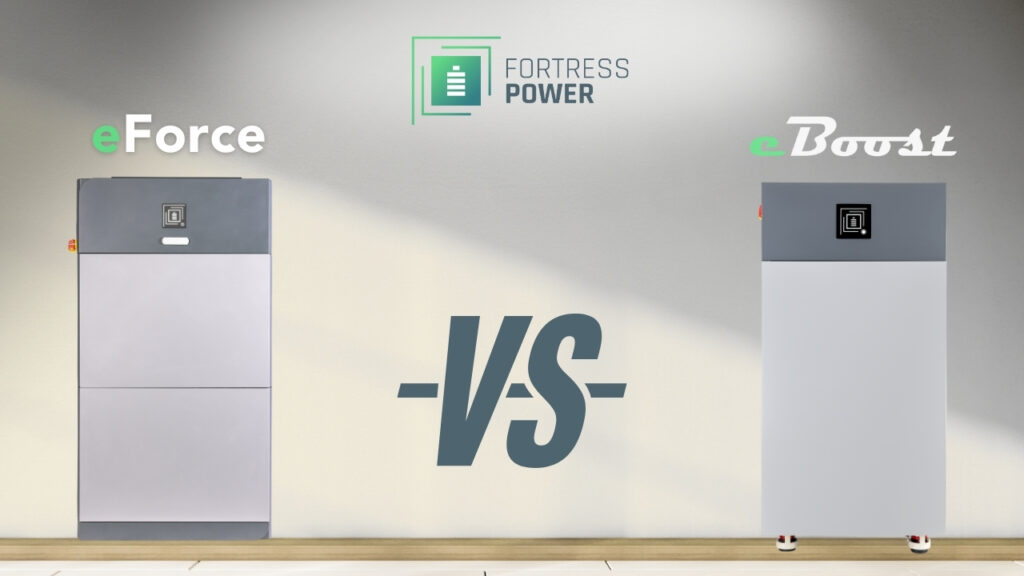
Fortress Power simplifies the process. Specializing in advanced LFP energy storage, we offer two high-performance 48V battery families built to cover the full range of residential and light commercial needs:

  • eForce — maximum-capacity system engineered for whole-home and commercial-grade backup.
  • eBoost — high-value, modular system designed for everyday reliability and scalability.

Both systems deliver long cycle life, industry-leading safety, and seamless installation through the fully integrated Fortress Power eWay wireway. Below is a complete breakdown to help you determine which solution best fits your home or project.

eForce vs. eBoost: Understanding the Two Fortress Power Battery Lines
eForce: Premium Backup Power for Full-Home & Commercial Loads

The eForce is engineered for homeowners and businesses that require maximum capacity and robust resilience. With up to 28.8 kWh in a single unit and 12 kW of continuous output, eForce supports high-demand homes, critical loads, and small commercial applications without needing multiple batteries.


View this post on Instagram


A post shared by Fortress Power (@fortresspower)

When paired with the Envy inverter and Guardian Gateway, eForce qualifies for an extended warranty of up to 15 years, providing long-term confidence and protection. Best for:

  • Whole-home backup
  • Light commercial applications
  • High-demand electrical loads
  • Installations requiring fewer batteries per inverter
  • Customers seeking premium longevity and warranty coverage 
eBoost: A High-Value, Modular Solution for Everyday Home Storage

The eBoost is designed for homeowners who want a cost-effective, flexible battery system without compromising performance. Its 16.1 kWh capacity and 12.8 kW output cover the needs of most households, and additional units can be added as usage grows.


View this post on Instagram


A post shared by Fortress Power (@fortresspower)

Like eForce, eBoost utilizes the integrated eWay system, which keeps wiring clean, speeds up installation, and ensures code-compliant deployment. Best for:

  • Homeowners seeking an affordable entry point into storage
  • Modular energy expansion over time
  • Daily cycling applications
  • Residential backup power
  • Straightforward, efficient installations
Important Note About eWay Compatibility

The eBoost uses its own dedicated eWay wireway. While it shares the same integrated design philosophy as eForce, the eBoost eWay is not cross-compatible with the eForce eWay. Each battery line requires its corresponding eWay model to ensure proper fit, optimized installation, and system safety. Installers should always pair each battery series with its designated eWay configuration.

eForce vs. eBoost: Understanding the Two Fortress Power Battery Lines

Both Fortress Power battery lines feature the integrated eWay, a streamlined wireway system that consolidates:

  • Busbars
  • Conduit ports
  • Breakers & emergency shutoff
  • Communications wiring
  • Clean cable routing

The eWay eliminates clutter, reduces installation time, and provides a consistent, professional appearance across all Fortress Power systems. For installers, this translates to faster commissioning and fewer external components — helping keep projects efficient and code-compliant.

How Fortress Power Compares: eBoost & eForce vs. Competitors

To provide a clear perspective on system performance, we compared the Fortress Power battery lines to two commonly referenced competitor models across capacity, output, installation factors, and warranty. Below is the side-by-side chart.

Feature Fortress Power eForce Fortress Power eBoost Competitor 3 Competitor 4
Nominal Capacity (kWh) 19.2–28.8 16.1 14.3 16.1
Max Continuous Power (kW) 12 12.8 7.2 10.2
Units Required to Support a 12 kW Inverter 1 1 2 2
Outdoor Rated Yes Yes Yes Yes
Cold-Weather Heater Included Included Not Included Not Included
Integrated Wireway / Wirebox  Included Included Not Included Not Included
Warranty Up to 15 years 10 years 10 years 10 years
Installation Simplicity Excellent Excellent Fair Fair
Built for Real-World Conditions

Both eBoost and eForce are engineered for reliable performance in any environment. Each system features:

  • LFP battery chemistry for maximum safety
  • Built-in heaters for cold-climate operation
  • IP65 outdoor-rated enclosures
  • High cycle life for daily use and long-term performance

Whether installed in an off-grid cabin, suburban home, or small business, these batteries are designed to deliver stable, year-round energy. Fortress Power is committed to helping installers and homeowners design energy systems that are reliable, scalable, and built to last.

Which Fortress Power Battery Is Right for You?

Choose eForce if you need:
  • Maximum available capacity
  • Whole-home or commercial-grade backup
  • Fewer batteries per inverter
  • A premium, extended warranty
  • High-demand load support
Choose eBoost if you want:
  • A cost-effective solution
  • Modular expansion
  • Strong daily-cycle performance
  • A simplified installation process
  • Dependable backup for essential loads

The Bottom Line

The eBoost and eForce represent the strongest LFP residential battery options in their categories. Whether you’re looking for an affordable entry point into storage or a flagship whole-home solution, Fortress Power delivers the durability, power output, and installation efficiency needed to support today’s energy-independent homes. Click here to get started today.