What Does It Really Mean to Live Off-Grid?
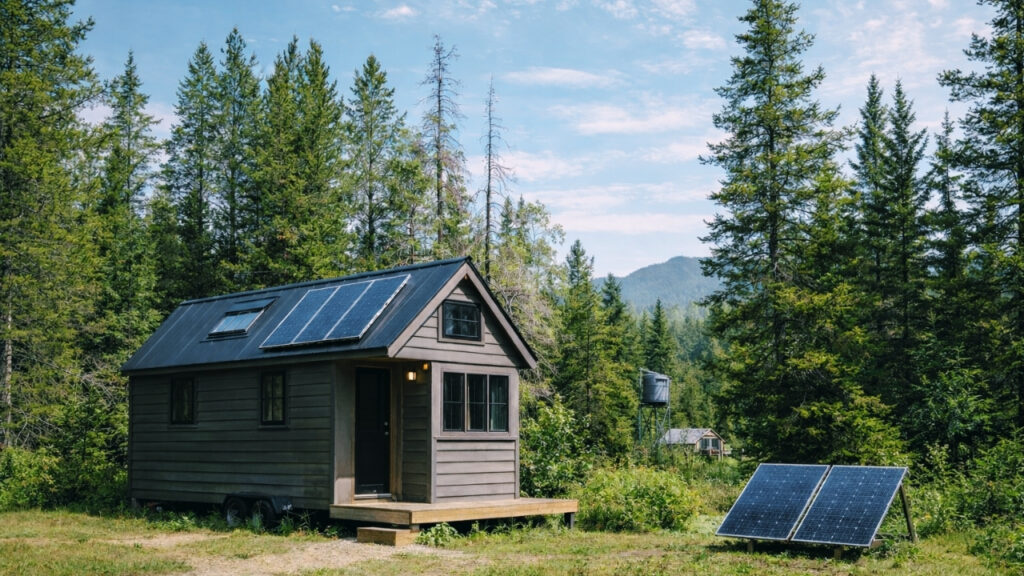
Living off-grid means your home or property operates without a connection to the traditional utility grid. Instead of relying on a power company, you generate, store, and manage your own electricity.
While off-grid living is often associated with remote cabins or extreme lifestyles, modern off-grid systems look very different. Today, advanced solar, battery storage, and inverter technology allow off-grid homes to operate reliably with the same comforts as grid-connected homes.
What Does “Off-Grid” Actually Mean?
An off-grid system is designed to supply all of a home’s power needs independently. This typically includes:
- A renewable energy source, most often solar
- Battery storage to store excess energy
- An inverter to convert stored power into usable electricity
Unlike grid-tied systems, off-grid systems are built to operate continuously without utility support.
Off-Grid vs Grid-Tied vs Hybrid Systems
Grid-tied systems rely on the utility grid and usually lose power during outages, while hybrid systems combine grid access with battery backup for short-term outages. Off-grid systems operate independently at all times and are designed for full energy self-sufficiency. They also require more planning, but offer the highest level of energy control and reliability.
Why People Choose to Live Off-Grid
There are many reasons homeowners, businesses, and installers choose off-grid power systems. Common motivations include:
- Energy independence from utilities and rising rates
- Reliable power in remote or outage-prone locations
- Predictable long-term energy costs
- Increased resilience during storms or grid failures
Off-grid systems are commonly used for rural homes, cabins, farms, workshops, job sites, and backup-critical properties.
What You Need to Live Off-Grid Successfully
Successful off-grid living depends on proper system design. Key factors include:
- Energy usage: Understanding daily power consumption is essential.
- Battery storage: Storage allows energy generated during the day to be used at night or during low production.
- System scalability: Modular systems allow capacity to grow as energy needs change.
- Environmental conditions: Sun exposure, climate, and seasonal changes all impact performance.
Is Off-Grid Living Reliable?
One of the biggest misconceptions is that off-grid power is unreliable. In reality, many power outages occur on the utility grid. A properly sized off-grid system with sufficient battery storage can provide stable, continuous power without dependence on external infrastructure. This is where modern energy storage platforms, like those developed by Fortress Power, play a key role by offering scalable, high-capacity batteries designed for real-world off-grid applications.
Is Living Off-Grid Right for You?
Off-grid living is ideal for those who want full control over their energy and are willing to plan for their power needs. It may be a good fit if you:
- Live far from utility access
- Want reliable power regardless of grid conditions
- Value energy independence and resilience
For others, a hybrid system may provide the right balance of backup and grid connection.
Living off-grid does not mean living without power. It means generating and managing your own energy with systems designed for reliability and independence. As energy storage technology continues to advance, off-grid living is becoming more practical, scalable, and accessible than ever before.
See how Fortress Power helps homeowners and installers design reliable, scalable energy systems built for independence. Learn more today.