August 2026

Beyond Backup: Five Ways a Home Battery Can Work for You Every Day

When most homeowners think about battery storage, they think about backup power. And for good reason. Having stored energy available when the grid goes down can provide valuable peace of mind.

But outages are only part of the story. A home battery can work throughout the year to help you make better use of solar energy, manage when you rely on the grid, and even participate in certain utility programs. Here are five ways energy storage can bring value to your home beyond backup power.

1. Store More of Your Solar Energy

Solar panels often produce the most electricity during the middle of the day, when you may not be using much of it. Without a battery, excess solar energy may be sent back to the grid.

Adding energy storage gives you another option. Instead of immediately sending that excess energy away, your battery can store it for later. When the sun goes down and your solar panels stop producing, you can use energy stored during the day to help power your home. This allows you to make greater use of the solar energy produced right on your property.

2. Use Stored Energy When Electricity Costs More

The price of electricity isn’t always the same throughout the day. Some utilities offer time-of-use rate plans, which charge different electricity rates depending on when energy is consumed. Electricity may cost more during periods of high demand and less during off-peak hours.

A home battery can help you manage when you pull electricity from the grid. Depending on your system setup and utility rate plan, you may be able to store energy when electricity costs less or when your solar panels are producing, then use that stored energy when grid electricity is more expensive. It’s another way your battery can work for you even when the grid is operating normally.

3. Keep Your Home Powered During an Outage

Of course, backup power remains one of the biggest reasons homeowners choose energy storage. When paired with the right system design, a home battery can provide stored energy for important household loads when grid power isn’t available. Instead of relying solely on the grid, homeowners can have another source of power available when unexpected outages occur.

And unlike a traditional generator, a battery can provide everyday energy benefits even when there isn’t an outage.

4. Participate in Virtual Power Plant Programs

Your home battery may also have the potential to become part of something bigger. Virtual Power Plants, or VPPs, connect individual energy resources, including home batteries, so they can work together to help support the electric grid.

During periods of high electricity demand, participating batteries may be called on to provide a portion of their stored energy. Depending on the program, homeowners may receive financial incentives or other benefits for participating. VPP availability and requirements vary by location, utility, and energy storage system, so homeowners should check which programs are available in their area.

As these programs continue to expand, they represent another way home energy storage can provide value beyond your property.

5. Prepare for Your Home’s Changing Energy Needs

The way homes use electricity is changing. Homeowners are adding electric vehicles, heat pumps, electric appliances, additional solar panels, and other equipment that can increase household electricity use. Energy storage can be part of planning for those changing needs. Depending on the system, homeowners may be able to expand their battery capacity or adjust how stored energy is used as their household energy needs evolve.

Thinking beyond what your home needs today can help you build an energy system that’s better prepared for tomorrow.

Home Energy Storage Is About More Than Emergencies

Backup power may be what first gets homeowners interested in batteries, but it doesn’t have to be the only time your system provides value. From storing more of your solar energy and managing electricity use to participating in eligible VPP programs, today’s home batteries can play a much more active role in how your household uses energy.

Fortress Power offers residential energy storage solutions designed to give homeowners greater flexibility and control over their energy. Whether you’re considering solar and storage for the first time or looking to expand an existing system, the right battery system can help you get more from the energy you produce and use every day. Explore our residential energy storage solutions and find the right fit for your home.

Adding battery storage doesn’t have to be complicated. With the right system and support, it can be a simple upgrade that makes a meaningful difference.
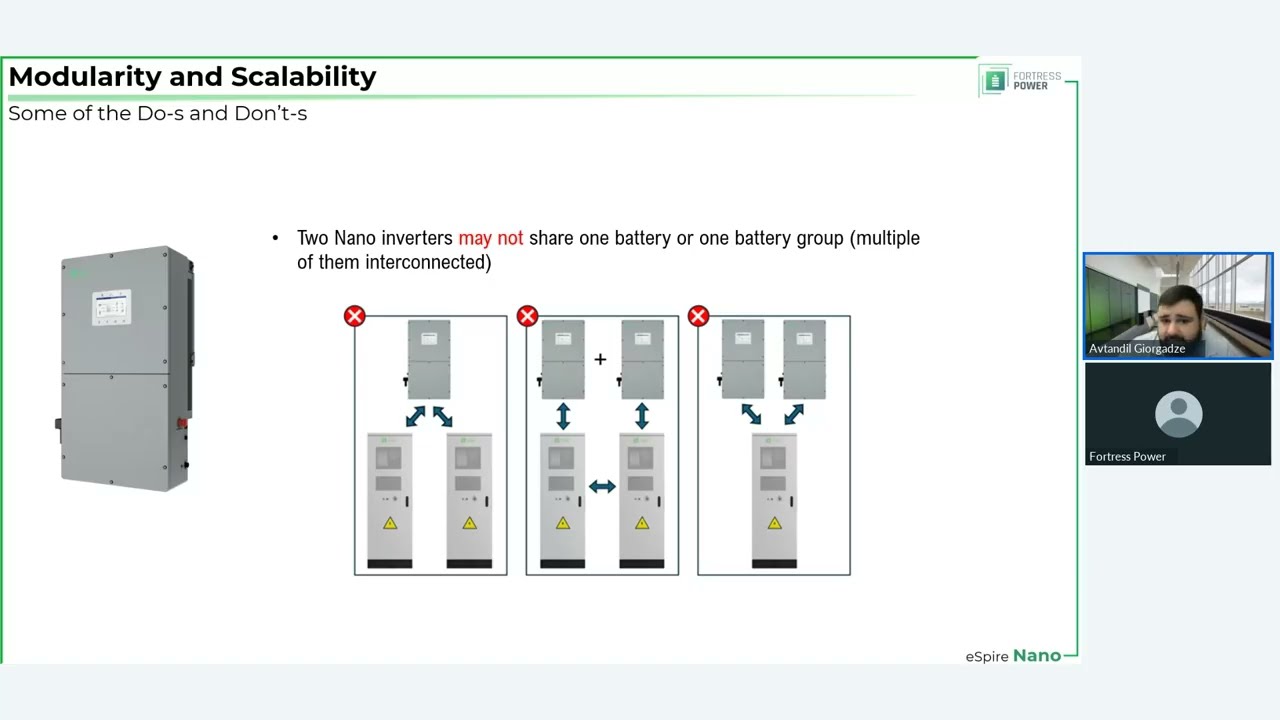
What Every Installer Should Know Before Their First eSpire Nano Project

As demand for commercial energy storage continues to grow, many residential solar installers are looking to expand into commercial and industrial (C&I) projects. But for many, the biggest obstacle isn’t finding customers—it’s the perception that commercial systems are too complex to design, install, and commission. The reality is that commercial energy storage doesn’t have to be intimidating.

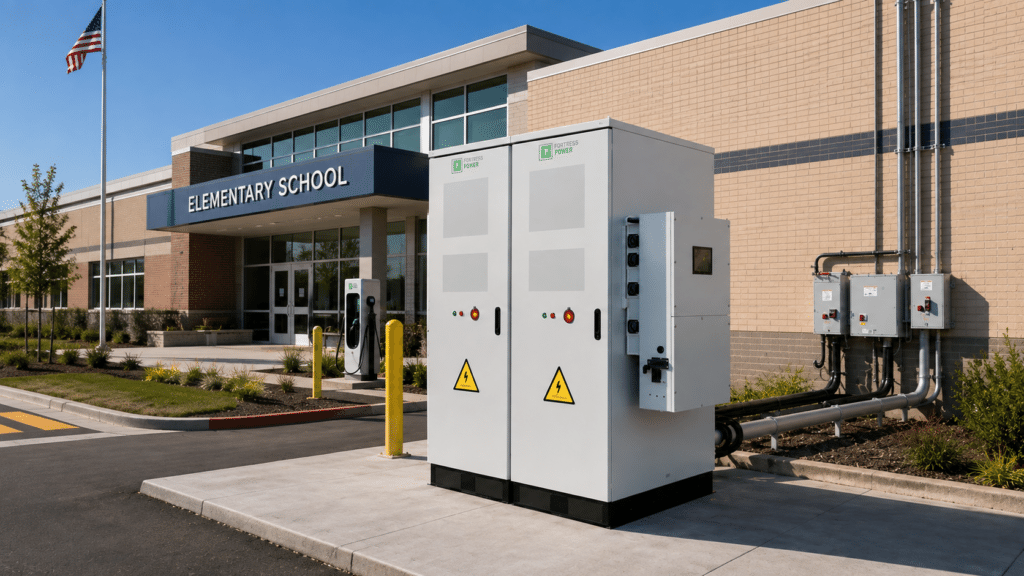
The Fortress Power eSpire Nano was developed to simplify commercial deployments while delivering the flexibility businesses need to manage energy costs, improve resilience, and prepare for future growth. Whether you’re installing a system for a small business, municipal building, school, farm, or retail facility, understanding a few key design principles can make the transition into C&I much more approachable.

Start with the Right Foundation

Every eSpire Nano system is built around two primary components:

  • A high-performance hybrid inverter
  •  A modular lithium battery system

Together, they create a scalable commercial energy storage solution capable of supporting everything from backup power to advanced energy management strategies. Available in multiple inverter and battery configurations, the Nano can be tailored to meet the specific needs of each project rather than forcing every installation into a one-size-fits-all design.

Flexibility Is One of Its Biggest Advantages

 No two commercial facilities have identical energy requirements. Some prioritize backup power during outages. Others want to reduce demand charges or optimize energy usage based on utility rates. Many require a combination of all three. The Nano supports:

  • Backup power
  • Self-consumption
  • Peak shaving
  • Time-of-use optimization
  • Generator integration
  • AC- and DC-coupled solar
  • Advanced Energy Management System (EMS) functionality

This flexibility allows installers to design systems around customer goals while leaving room for future expansion.

Design for Today—And Tomorrow

One of the biggest differences between residential and commercial installations is planning for future growth. Businesses often expand operations, increase electrical loads, or add equipment years after an energy storage system is installed. The Nano’s modular architecture allows installers to begin with a system sized for today’s needs while maintaining the ability to scale battery capacity and inverter output as customer requirements evolve. Instead of replacing an entire system, installers can build with expansion in mind from day one.

Proper System Design Matters

A flexible platform also requires thoughtful system design. When configuring a Nano installation, installers should consider:

  • Selecting the appropriate inverter model for the site’s electrical service
  • Matching PV strings correctly across MPPTs
  • Planning proportional PV distribution when battery capacities differ
  • Following recommended wall mounting and clearance requirements
  • Ensuring adequate airflow for long-term performance
  • Verifying proper phase rotation during commissioning

Taking time to address these considerations during system design helps improve efficiency, reliability, and overall system performance.

Simplifying Commercial Installation

Commercial projects don’t have to involve unnecessary complexity. The eSpire Nano integrates features that reduce installation time while helping streamline commissioning, including:

  • Built-in MPPTs
  • Integrated rapid shutdown transmitter
  • Dedicated generator connectivity
  • Smart load functionality
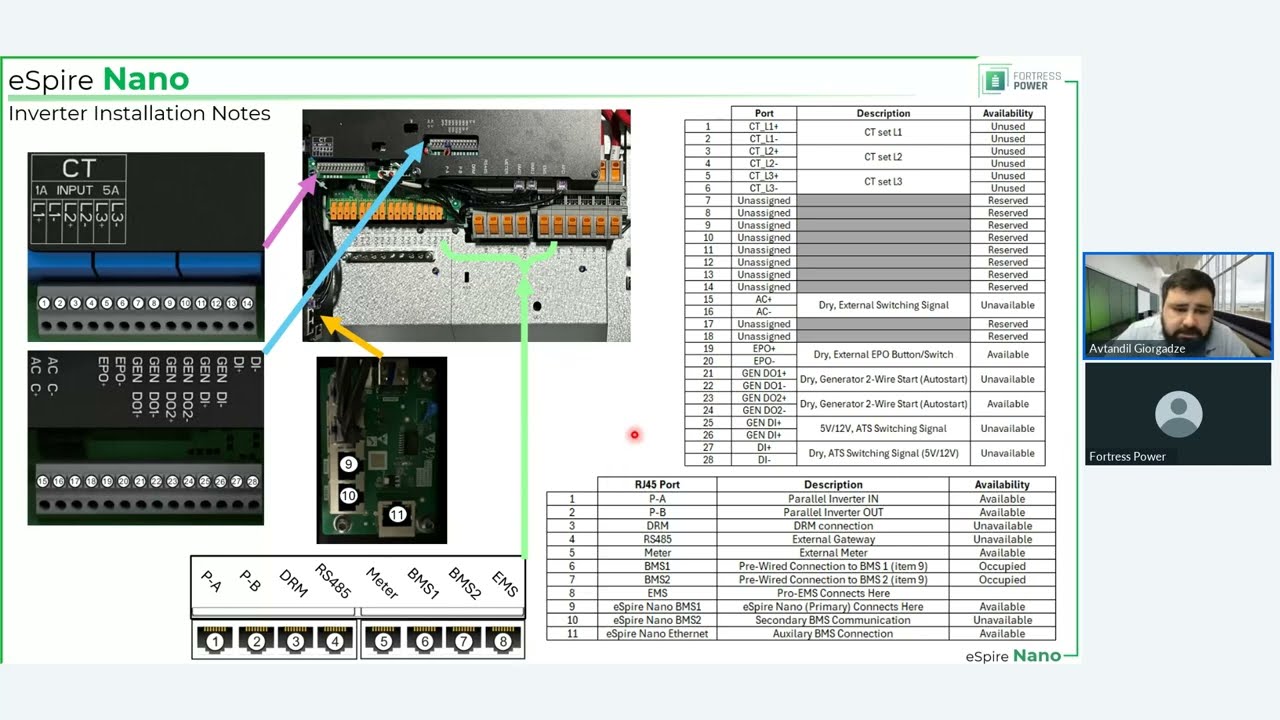
  • Simplified communication architecture
  • Guided commissioning through the Fortress Power Pro App

By reducing the number of external components and simplifying configuration, installers can spend less time troubleshooting and more time delivering completed projects.

YouTube video player

YouTube video player

A Practical Entry Point into Commercial Energy Storage

Many installers assume their first commercial project needs to be a large warehouse or industrial facility. In reality, some of the best opportunities are much smaller. Medical offices, restaurants, farms, schools, retail stores, and municipal buildings all have growing demand for reliable backup power and energy cost management. With a modular design, flexible operating modes, and scalable architecture, the Nano provides an approachable pathway for installers ready to expand beyond residential energy storage. Learn more today.

Commercial Battery Storage Is About More Than Batteries: Why Energy Management Software Matters

When evaluating a commercial battery energy storage system (BESS), it’s easy to focus on battery capacity, inverter size, or system specifications. While those components are essential, they’re only part of the equation. The real value of a commercial energy storage system comes from how intelligently it manages energy. That’s where an Energy Management System (EMS) makes the difference.

An advanced EMS transforms a battery system from simple backup power into an intelligent energy asset—helping businesses reduce operating costs, optimize solar production, participate in utility programs, and maximize return on investment (ROI).

What Is an Energy Management System?

Think of a commercial battery system as three essential components working together:

  • The battery stores energy.
  • The inverter moves power where it’s needed.
  • The Energy Management System (EMS) determines when, where, and how that energy should be used.

Without an EMS, a battery can only perform basic charging and discharging. With an advanced EMS, the system continuously analyzes energy consumption, utility rates, solar production, and operating conditions to make intelligent decisions automatically. The result is a system that works harder and delivers greater value every day.

How an EMS Helps Lower Energy Costs

Every commercial facility has different energy demands. Some businesses face expensive demand charges. Others operate under complex time-of-use (TOU) utility rates. Many want to maximize onsite solar production or prepare for Virtual Power Plant (VPP) participation. An advanced EMS continuously optimizes the battery system to help meet those goals. Common optimization strategies include:

  • Peak shaving to reduce costly demand charges
  • Time-of-use optimization by charging and discharging when electricity costs are most favorable
  • Solar self-consumption to maximize renewable energy usage
  • Backup power management during utility outages
  • Utility demand response and Virtual Power Plant (VPP) participation where available

Instead of simply storing energy, the system actively works to improve financial performance throughout the day.

Why Intelligent Controls Matter

Consider a commercial facility with rooftop solar. During the day, solar production powers the building while excess energy charges the battery. As electricity rates increase later in the afternoon, the EMS automatically discharges stored energy to offset expensive utility power and reduce peak demand.

If the utility calls a demand response event, the system can discharge energy to support the grid. If an outage occurs, the battery seamlessly transitions to backup power for critical loads. All of these operating modes happen automatically without requiring constant operator intervention. That’s the difference intelligent controls can make.

One Connected Platform Simplifies Commercial Energy Storage

Many commercial energy storage projects rely on multiple software platforms from different manufacturers. One platform performs financial modeling, another controls the battery, while a third provides system monitoring.

When problems arise, troubleshooting across multiple vendors can become complicated.An integrated platform helps eliminate that complexity by connecting system design, financial analysis, energy management, monitoring, and hardware into one ecosystem. Because the software and hardware are designed to work together, installers gain a more streamlined commissioning process while owners benefit from improved long-term performance and visibility.

Matching the Right EMS to the Right Project

Not every commercial project requires the same level of energy management. Facilities with relatively simple operating schedules may only need basic functions such as: 

  • Standard peak shaving
  • Basic time-of-use optimization
  • Solar maximization
  • Remote monitoring and alerts

Other facilities including schools, municipalities, manufacturing facilities, EV charging sites, and businesses operating under complex utility tariffs — often benefit from more advanced capabilities such as:

  • Detailed energy optimization
  • Circuit-level monitoring
  • Complex utility rate modeling
  • Virtual Power Plant (VPP) participation
  • Demand response integration
  • Advanced reporting and analytics

Choosing the right EMS allows installers to tailor the solution to each project’s operational goals while providing room for future expansion as energy programs evolve.

Looking Beyond Hardware Specifications

Battery capacity and inverter power are important, but they don’t tell the whole story. Two systems with similar hardware can deliver dramatically different financial results depending on how effectively they’re managed.

As utility rates become more dynamic and businesses look for new ways to reduce energy costs, intelligent energy management is becoming just as important as the batteries themselves. The most successful commercial energy storage projects combine reliable hardware with advanced software that continuously adapts to changing energy conditions, helping customers maximize savings today while preparing for tomorrow’s opportunities.

Learn More About Fortress Power Commercial Energy Storage

Fortress Power’s commercial energy storage solutions combine scalable battery storage, advanced inverters, and intelligent energy management software to help businesses reduce costs, improve resilience, and maximize the value of every kilowatt-hour. Whether you’re designing your first commercial battery project or deploying advanced energy management across multiple sites, choosing the right combination of hardware and software is the foundation for long-term success.